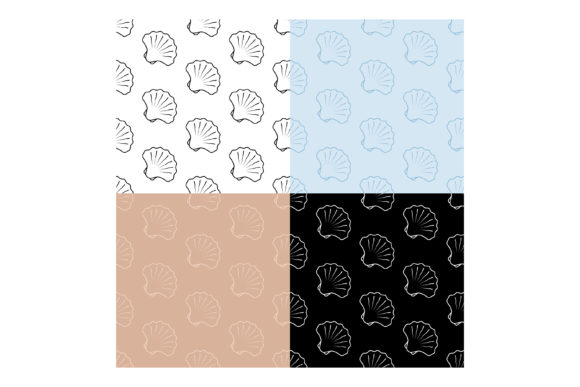
Seamless Patterns with Sea Shell: A Practical Guide for Designers and Creators
In the world of design, seamless patterns play a crucial role in creating cohesive and visually appealing projects. Among the many themes available, seamless patterns with sea shell offer a unique blend of natural beauty and versatility. These patterns can be used across various industries, from fashion and textiles to digital design and home decor. Understanding how to effectively integrate seamless patterns with sea shell into your workflow can enhance your creative output and streamline your design process.
The set of seamless patterns with sea shell is particularly valuable for those working with ornamental designs, textile printing, or decorative elements. Whether you're designing fabric for clothing, creating background textures for a website, or developing packaging for seafood products, these patterns provide a consistent and elegant base that aligns with nature-inspired aesthetics.
Understanding the Role of Seamless Patterns in Design Workflows
Before diving into implementation, it's important to understand where seamless patterns with sea shell fit within a broader design process. These patterns are often used as foundational elements that support other design choices. For example, when planning a textile collection, a designer might start by selecting a set of seamless patterns with sea shell as a recurring motif. This ensures visual continuity while allowing for variation through color, scale, and placement.
During the execution phase, these patterns can serve as a reference point for consistency. If you're working on a digital illustration project, using a set of seamless patterns with sea shell as a background layer can help maintain a cohesive look without overwhelming the main subject. Similarly, in print design, these patterns can act as a subtle backdrop that complements more prominent graphics or typography.
After the initial design is complete, seamless patterns with sea shell can also be useful for quality control. By reviewing the pattern's repetition and alignment, you can ensure that the final product meets high standards of precision and visual appeal.
Integration with Other Design Tools and Resources
One of the strengths of seamless patterns with sea shell is their compatibility with a wide range of design tools and platforms. Whether you're using Adobe Illustrator, Photoshop, or vector-based software like Inkscape, these patterns can be easily imported and adapted to suit your needs. This flexibility makes them an essential part of any designer's toolkit.
When working with vector graphics, the set of seamless patterns with sea shell can be scaled without losing quality, making them ideal for both small and large-scale projects. Additionally, they can be combined with other design elements such as icons, illustrations, or typography to create layered compositions that are both functional and aesthetically pleasing.
For creators who work with print-on-demand services, having access to a seamless pattern set can save time and effort. Instead of designing from scratch, you can use pre-made patterns as a starting point, allowing you to focus on customization and branding rather than repetitive layout work.
Practical Implementation Tips for Designers
To get the most out of seamless patterns with sea shell, consider the following practical tips:
- Start with a clear purpose: Define how the pattern will be used in your project. Will it be a background, a texture, or a decorative element? This will guide your selection and application.
- Experiment with variations: Adjust the color, scale, and spacing of the pattern to match your design goals. Many software tools allow for easy modification of these parameters.
- Test for consistency: Before finalizing a design, review the pattern’s repetition to ensure there are no visible seams or irregularities.
- Combine with complementary elements: Use the pattern as a foundation and build upon it with other design components to create depth and interest.
For example, if you're designing a fabric collection, you might begin by selecting a set of seamless patterns with sea shell as the base. Then, you could add hand-drawn illustrations or custom typography to create a unique and cohesive look. This approach not only saves time but also ensures a professional finish.
Workflow Examples and Use Cases
The set of seamless patterns with sea shell can be applied in various workflows depending on your field. Here are a few examples:
- Fashion Design: Use the pattern as a print for garments or accessories. The natural theme complements beachwear, resort collections, or eco-friendly fashion lines.
- Interior Design: Incorporate the pattern into wallpaper, cushions, or rugs to add a touch of coastal charm to a space.
- Digital Art: Apply the pattern as a background for illustrations, web banners, or social media posts to create a unified visual style.
- Marketing Materials: Use the pattern in brochures, packaging, or promotional items to reinforce brand identity and evoke a sense of elegance and nature.
Each of these applications highlights the adaptability of seamless patterns with sea shell and demonstrates how they can be seamlessly integrated into different creative processes.
Long-Term Use and Maintenance
When using seamless patterns with sea shell over the long term, it's important to maintain organization and efficiency. Store your pattern sets in a centralized location, whether it's a digital library or a physical folder, to avoid confusion and duplication. This is especially useful if you're working on multiple projects simultaneously.
Additionally, consider the compatibility of the patterns with future design trends. While seamless patterns with sea shell have a timeless quality, staying aware of evolving styles can help you make informed decisions about when and how to use them.
Finally, remember that seamless patterns with sea shell are not just aesthetic choices—they are practical tools that can enhance your workflow, improve consistency, and elevate the overall quality of your work.